
Read the journal, write the Methods, prepare your figures. That’s the advice you’ll generally find when searching for tips on writing a scientific paper. But are these really the best strategies to start a big writing project? In this post, I outline 7 alternative steps to writing a paper.
1 Don’t start with the Methods
Okay, this is going to sound strange, but… don’t start with the Methods. A lot of researchers give this advice, and I totally get where they’re coming from. It’s an easy place to start. There’s little thinking involved, and getting stuff on paper makes you feel like you’ve achieved something.
But, starting with the Methods is a sure-fire way to confuse yourself. Because what’s next? Results. And then the questions come. What are you supposed to report? Which findings are interesting? And how on earth are you supposed to start the Discussion? Before you know it, you’re stuck in a spiral of doom, wondering if anything ever made sense. What’s more, writing the Methods section first places you in a narrow, detail-oriented mindset, which is unhelpful for writing an insightful journal article that boasts the implications of your work.
2 Think, a lot
Instead of starting with the Methods section, take time to think about your results, and what they mean for your branch of science, and for society. This is not easy, but it’s key to writing an interesting paper. Without context, the paper will read like a report instead of a journal article.
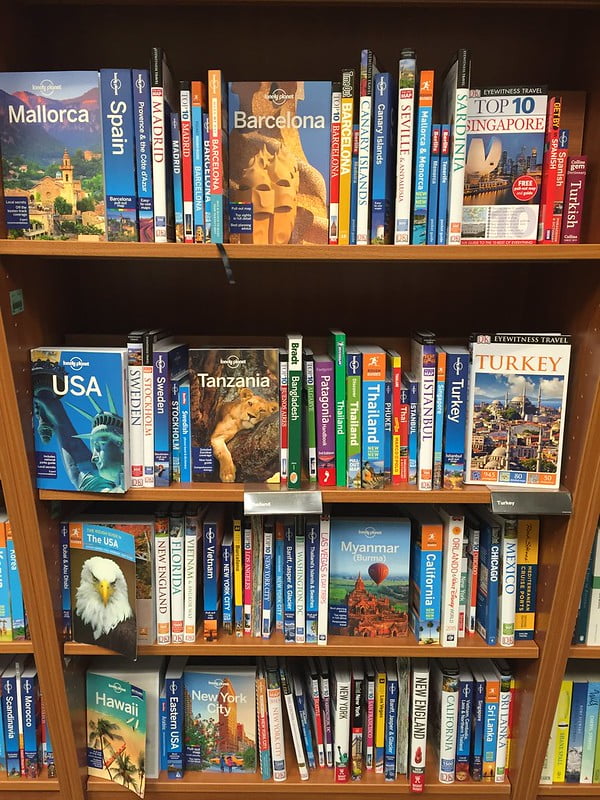
Think of it this way: the journal article is like a travel guide for your data. The best tour guides don’t just point stuff out, but they tell a story. They don’t say: This is a piece of rock”, but they say “This was a fountain where villagers would gather to celebrate the start of the spring.” They don’t say: “Birds like to eat here”, but they say “This vast landscape of grey mud is like a McDonald’s for birds migrating south for the winter.”
The best way to place your work into context and find interesting angles is to take a step back from that precise mindset needed for data analysis. Get creative! Make a mindmap, talk to colleagues, present your work to your department or at a conference, write a blog post, or make a TikTok. Work with your findings in lots of different ways.
3 Develop a narrative
Once you have a good grasp on your results, it’s time to develop the narrative of the paper. The narrative is the backbone of your journal article and forms a coherent flow between the arguments the paper is going to make. In other words, it’s that essential connection between the Introduction and Discussion.
If you already have a clear narrative in your head, great! If you’re not sure yet, I recommend building the narrative step by step. A good trick I learned during my PhD, is to start by writing a mini-abstract. Try for example to answer these questions in about two sentences:
- Introduction: What is the problem this research aims to address/why did you do this research?
- Methods/Research Design: How did you design/conduct the research?
- Results: What did you find?
- Discussion: What do your findings mean (for science, society, …)?
To develop a narrative, you can then link – loosely, building a narrative is not an exact science – the answers to each of these questions. Start by linking the mini-intro to the mini-methods. Explain why you decided to use these particular methods to address the problem outlined.
Next, link the mini-results to the mini-discussion. How does each finding lead to each conclusion, and which literature supports and contests your findings? Are there any issues with the research design, that could affect the conclusions that you draw?
Finally, link the mini-intro to the mini-discussion: are there any parts of the research question that your research wasn’t able to answer? How could future research address that?
4 Get input
By now you have an interesting narrative that will guide your writing. Well done, the hard(est) part is over! But don’t start with writing just yet.
First, discuss your plans with your supervisors and/or co-authors. They can pick up on important aspects you forgot, and steer you in the right direction. I know asking for feedback can be scary, but it’s much nicer to change plans early on than spending days drafting a text that turns out to be useless.
Tip: agree with your supervisors upfront on how to share your progress and receive feedback. If they expect a full draft and you send them a 1-page outline, that’s going to be confusing. So make sure you’ve got clear agreements in place. If you’d like more tips on feedback, read my post on getting useful feedback here.
Have you done a lot of thinking, but still find it difficult to develop a narrative? Book a 1-on-1 coaching appointment with me. In 90 minutes, I help you figure out what the data could mean. Little disclaimer: I only ask questions to guide your thinking, you need to bring the knowledge 😉.
5 Draft version 1
Drafting is the stage that most people would consider ‘writing’. Getting in the flow and hitting those words counts day after day. It’s fun!
However, drafting a scientific paper can also be excruciatingly frustrating. I think every scientist has at some point found themselves staring at a screen, not knowing what to write next. That’s why an outline is so important. It makes drafting a breeze. Instead of having to stop and think every time you finish a paragraph, you can simply check the outline to see what to write next.
Lucky for you, you already have an outline. The narrative structure discussed in step 3 is a great place to start drafting. Simply choose one of the questions/answers listed in your narrative, and spend some time writing about them. For example, if you stated result x and linked it to conclusion y and literature a, b, and c, then you can now spend some writing a draft paragraph on these items.
To really get into the flow of drafting, it helps to turn off your inner perfectionist for a while. Don’t focus on writing well, on getting the facts right, or trying to sound intelligent. The text doesn’t have to be streamlined or polished yet. Sentences are allowed to be clunky, hell, even your spelling and grammar are allowed to be way off. Just let the words flow and worry about all that stuff later.
6 Revise & repeat
A first draft is amazing. It’s real, raw material. No matter how messy, chaotic, and filled with half-baked arguments, it’s so much better than having no draft. So well done!
Now that you have a first draft, it’s time to start revising. Start by checking the content. Are you happy with the arguments you’re making, and have you included the relevant literature in a way that makes sense? For example, if you argue in the Introduction that your research on seed rot in corn is important for global food security, have you included enough literature to explain and support this argument?
Next, focus on the high-level structure of the draft. Are the pieces of text that belong to the same topic placed together? Are there any sudden changes in topic that can be confusing for the reader? Address these areas in your text. Also, ensure that each paragraph is about one topic and is not too long (roughly 250 words).
Once you’ve revised the draft for yourself, make it pretty and share it with your supervisors and/or co-authors to collect feedback. Then, revise and repeat, until you all agree the manuscript is ready for submission. This can take a while, especially if it’s your first paper.
7 Getting ready for submission
Before you submit the paper, there are a couple of steps you can take to increase the chance of getting published. Copy-editing is essential, as are proofreading and formatting. Try reading your work out loud to pick up on clunky or overly long sentences.
And don’t forget about the title! Set some time dedicated to formulating a clear title. It’s the first thing people will see, and use to judge the relevance of your work. I could go into endless more detail on the submission and publication process for scientific papers, but I won’t bore you with that here. Instead, you can check out my guide in this post. Good luck writing!
Enjoyed this post? Sign up for my monthly newsletter and get new updates delivered straight to your inbox:
[mailerlite_form form_id=2]